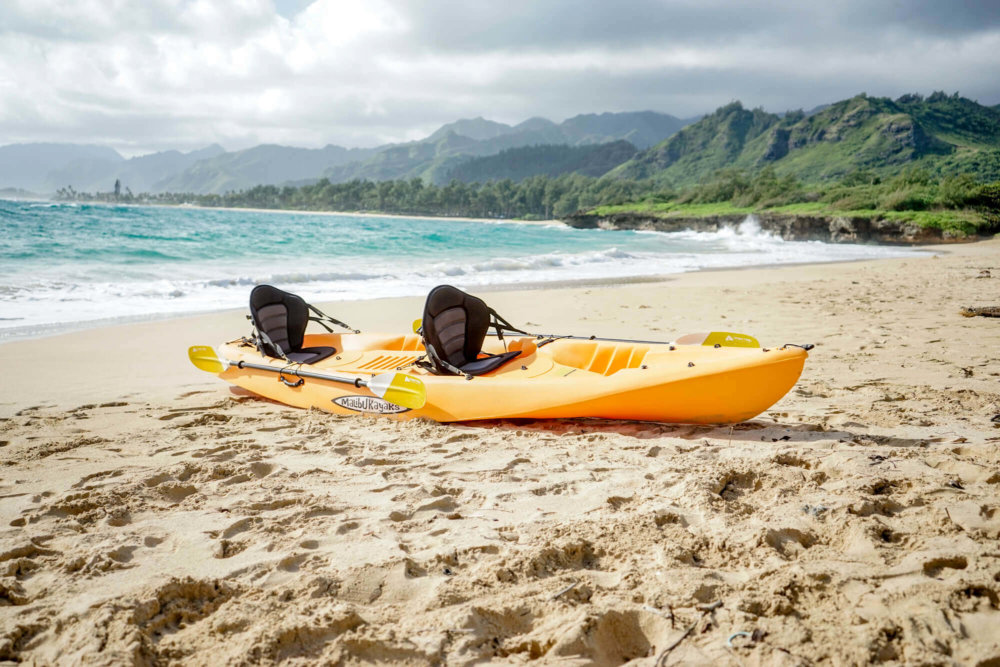
Oʻahu Kayak Safety & Tide Guide — Best Launch Conditions by Beach
Whether you're renting a kayak for the first time or you're a seasoned paddler planning your next outing, understanding Oʻahu's tides, wind patterns, and swell conditions is the key to a safe and enjoyable day on the water. Each launch spot around the island has its own personality — and knowing what to expect before you go makes all the difference.
Before You Launch — Understand the Basics
Three factors determine whether your kayak trip will be smooth sailing or a struggle: wind, tide, and swell. Here's the local knowledge you need.
💨 Wind Direction & Timing
Oʻahu's trade winds blow consistently from the east to northeast nearly year-round. These winds typically start calm in the early morning, pick up strength around 10–11 AM, and peak in the afternoon. Morning launches (7–9 AM) are your best bet for flat, glassy water. By late morning, even protected spots can develop chop. If you see whitecaps from shore, it's time to reconsider.
🌊 Tide Timing
The tide affects how easy it is to get your kayak into deep water. At some beaches, low tide means a long walk across exposed reef. Launching 1–2 hours before high tide gives you the easiest access — the water is rising, covering the reef, and you can float your kayak from the sand. As a beginner rule of thumb: rising tide = getting easier, falling tide = getting harder.
🏄 Swell Height
For recreational kayaking, swells under 3 feet are considered safe. Anything above that can create breaking waves at the shoreline that make launching and landing hazardous. Check the NOAA marine forecast for your specific coastline before heading out. Winter months (November–February) bring larger north and east swells that can make exposed launches challenging even on calm-looking days.
Launch Spot Guide — Best Conditions by Beach
Not all kayak launches on Oʻahu are created equal. Here's a breakdown of five popular spots and the conditions where they shine.
| Launch Spot | Best Tide | Best Wind / Time | Difficulty | Notes |
|---|---|---|---|---|
| Kailua Beach | High tide (easier access) | Morning, calm winds | Beginner-friendly | Wide sandy launch, plenty of parking, popular with families. Low tide means a long walk to deep water. |
| Lanikai Beach | Mid-to-high tide | Calm mornings (7–9 AM) | Beginner-friendly | Parking is very limited — arrive early. Narrow beach but gorgeous turquoise water. Watch for offshore winds. |
| Chinaman's Hat (Mokoliʻi) | 2 hours before high tide through high tide | Calm mornings, check wind direction carefully | Moderate | Must be able to paddle against the wind to return. Crossing is over shallow reef — time it right or risk getting stuck at low tide. |
| Kāneʻohe Sandbar | Low tide (sandbar fully exposed) | Morning launch | Easy paddling | Once you're on the sandbar, water is ankle-to-knee deep. Great for beginners and groups. Protected by the reef. |
| Kahana River | Any tide | Protected from wind — paddle any time | Easy / Beginner | Calm, protected river paddle. No swell or surf to worry about. Great for first-timers or a relaxed day. |
Tide Tips for Beginners
If you're new to ocean kayaking, tides can seem confusing — but they don't have to be. Here's a simple breakdown.
What Causes Tides?
Tides are caused by the gravitational pull of the moon and sun on the Earth's oceans. As the moon orbits, it pulls the ocean water toward it, creating a "bulge" of high water. As the Earth rotates, different coastlines pass through these bulges, creating two high tides and two low tides approximately every 24 hours.
Why Do Tides Matter for Kayaking?
On Oʻahu, the difference between high and low tide can be 2–3 feet. That may not sound like much, but on shallow reef flats (like the route to Chinaman's Hat or the approach at Kailua Beach), a 2-foot drop can mean the difference between floating your kayak from the sand and dragging it across exposed coral. Tides also create currents — water moving in and out through channels can push you off course or make paddling significantly harder.
How to Read a Tide Chart
A tide chart (also called a tide table) shows the predicted water level at a specific location throughout the day. Here's what to look for:
- The curve line — shows water level rising and falling. When the line goes up, the tide is rising (incoming). When it goes down, the tide is falling (outgoing).
- High tide peaks — shown as the highest point on the curve, marked with the predicted height (e.g., 2.3 ft).
- Low tide troughs — the lowest point, marked with the lowest height (e.g., 0.1 ft).
- Time labels — each high and low tide is labeled with its time of day in local time.
Pro tip: Use the NOAA Tide Predictions tool and select the station closest to your launch spot. For windward Oʻahu, the Moku o Loʻe (Coconut Island) station in Kāneʻohe Bay is the most relevant reference.
Simple Rule for Beginners
If the tide chart shows the water rising toward high tide and you're planning to launch within 2 hours of that high tide, you're in the sweet spot. If the chart shows the tide falling toward low, you'll have a longer walk to the water and a shorter window before the water gets too shallow for easy paddling.
Safety Checklist
Before you load your kayak onto the car, run through this checklist. It only takes two minutes and it could save your trip — or more.
Gear to Bring
- Life jacket (PFD) — properly fitted and fastened. Required by law on any vessel in Hawaiʻi waters.
- Reef-safe sunscreen — Oʻahu's sun is intense even on cloudy days. Reapply every 2 hours.
- Plenty of water — at least 1 liter per person per hour. Dehydration sneaks up fast on the water.
- Phone in a dry bag — for emergencies, photos, and checking conditions.
- Water shoes or reef walkers — coral is sharp and can cause serious cuts.
- Hat and sunglasses with a strap — sun protection that won't blow away.
- Snacks — granola bars, fruit, or anything that gives you quick energy.
Pre-Launch Checks
- ☐ Check the wind forecast — sustained winds under 15 mph? Good to go.
- ☐ Check the tide chart — do you know when the tide will turn?
- ☐ Check the swell forecast — under 3 feet? Proceed with confidence.
- ☐ Can you paddle against the wind to return to your launch point? If not, choose a different spot or day.
- ☐ Does someone on shore know your plan and expected return time?
- ☐ Is your kayak secure and all gear strapped down?
When to Turn Back
- Wind picks up and creates whitecaps or steady chop
- You feel tired, cold, or uncomfortable — listen to your body
- Visibility drops due to rain, fog, or glare
- You lose sight of your launch point or landmarks
- Anyone in your group is struggling or anxious
- You see lightning or hear thunder — get off the water immediately
🚣 Book an Adventure with Active Oʻahu
Ready to get out on the water? We provide top-quality kayak and gear rentals, including heavy-duty roof pads and straps, so you can transport your gear to any launch spot with ease. Our team will give you a full safety and tide briefing before you head out.