Kailua Town History & Cultural Heritage
Ancient Kailua — A Chief's Residence and Sacred Ground
Long before Kailua became known for its powder-soft beaches and laid-back vibe, this Windward Oahu community was one of the most significant population and political centers in the Hawaiian Islands. The fertile lands, abundant freshwater, and protected bay made Kailua an ideal place for aliʻi (Hawaiian royalty) to establish residence. Chiefs chose Kailua for its strategic location and rich natural resources — the very same qualities that draw visitors today.
At the heart of ancient Kailua sits Kawai Nui Marsh and Fishpond, one of the largest remaining freshwater fishpond systems in all of Hawaiʻi. Spanning roughly 830 acres, Kawai Nui was an engineering marvel of early Hawaiian aquaculture — a sophisticated system that produced ʻamaʻama (mullet) and ʻawa (milkfish) to feed the thriving population. The pond's raised earthen walls and sluice gates, built entirely by hand, demonstrated the deep understanding native Hawaiians had of hydrology, ecology, and sustainable resource management. Today, Kawai Nui Marsh is a registered State Historic Site and provides critical wetland habitat for endangered Hawaiian waterbirds.
Overlooking the marsh stands Ulupō Heiau, a massive stone platform temple that dominates the landscape from its position on the eastern edge of Kawai Nui. At approximately 140 by 180 feet with walls up to 30 feet high in places, Ulupō is one of Oʻahu's largest remaining heiau. Legend connects its construction to the Menehune, the mythical small-statured people of Hawaiian folklore, who were said to have built the massive structure in a single night by passing stones hand-to-hand from as far away as Kualoa. Archaeological evidence suggests the heiau served as an agricultural temple (heiau hoʻoulu ʻai) dedicated to crop fertility and abundance — fitting for a region whose fishponds and taro terraces fed so many.
The Meaning of "Kailua"
The name Kailua literally means "two seas" or "two currents" in the Hawaiian language. This refers to the two lagoons that once framed the area — Kawai Nui and Kaʻelepulu — which were connected to the ocean and created the vast wetland complex that sustained ancient Kailua. The name is a testament to how water — fresh and salt — has always been central to Kailua's identity.
The Plantation Era — Rice, Sugarcane, and New Communities
As Hawaiʻi's economy shifted in the late 19th and early 20th centuries, Kailua transformed from a chiefly center into an agricultural hub. The marshes and foothills that once grew taro were converted to rice paddies and sugarcane fields. Chinese and Japanese immigrant laborers, who first came to Hawaiʻi to work on sugar plantations, established small farms and businesses in the Kailua area, planting rice in the wetlands and contributing to the cultural tapestry that defines Windward Oahu today.
The Kailua Rice Mill once operated near where Kailua Road now runs, processing grain from the extensive paddies that filled much of what is now Kailua town. Remnants of this agricultural past can still be seen in the irrigation ditches (ʻauwai) that crisscross the landscape, many of which trace back to pre-contact Hawaiian water management systems that were adapted during the plantation era.
By the early 1900s, Kāneʻohe Ranch controlled much of the land in the Kailua- Kāneʻohe region, running cattle on the slopes above town and managing water resources. Harold K.L. Castle, whose family land holdings shaped much of Windward Oahu's development, played a pivotal role in Kailua's transition from agricultural land to residential community.
Mid-Century Transformation — The Pali Highway Opens Kailua
Before 1957, reaching Kailua from Honolulu meant a long, winding drive around the island's southern and eastern coastlines, or a trip over the old Pali Road — a narrow, hairpin-turn route that traced the cliff edge. That changed dramatically with the opening of the John H. Wilson Tunnels on the new Pali Highway, which cut through the Koʻolau Mountains and reduced travel time from Honolulu to about 30 minutes.
The highway opening sparked a development boom. Kailua rapidly transformed from a quiet plantation and ranching town into a thriving suburban beach community. Homes replaced sugarcane fields, and Kailua Beach — previously a local secret — began appearing on national "best beaches" lists. The Kailua Beach Park we know today was established, and the town center grew with shops, schools, and churches serving the expanding population.
Modern Kailua — Beach Culture, Local Business, and Conservation
Today, Kailua strikes a unique balance as both a world-famous beach destination and a tight-knit local community. Its downtown area, centered on Kailua Road and Hamakua Drive, is filled with independently owned cafés, boutiques, and surf shops — a deliberate contrast to the chain-store malls found elsewhere on Oʻahu. The Kailua Farmers Market, held weekly, showcases local produce, artisan foods, and crafts that reflect the area's agricultural heritage and contemporary food culture.
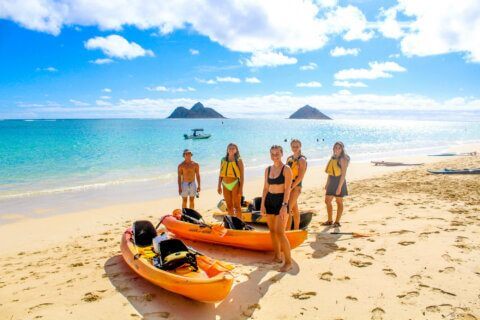
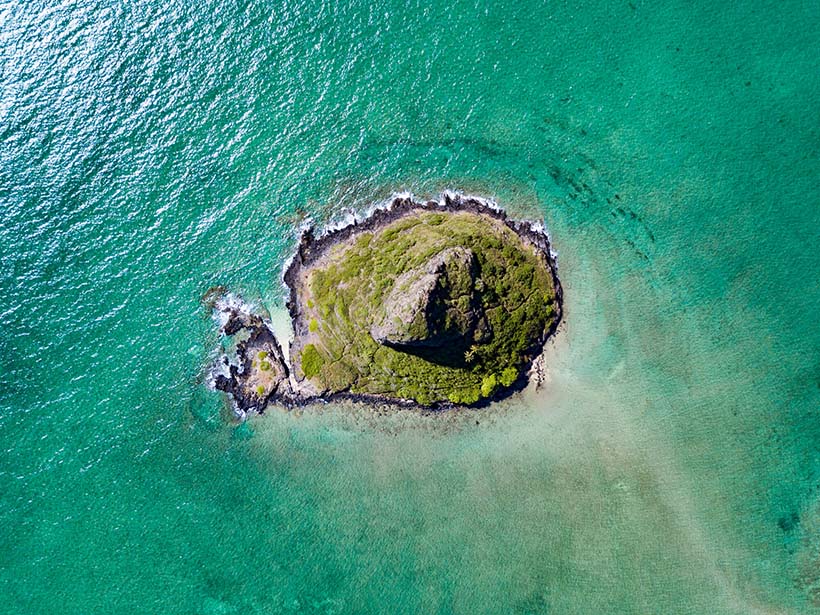
Kailua Beach and neighboring Lanikai Beach consistently rank among the world's finest. The calm, turquoise waters of Kailua Bay are protected by an offshore reef, making it an ideal spot for kayaking, stand-up paddleboarding, and swimming. The Mokulua Islands (Moku Nui and Moku Iki), designated seabird sanctuaries visible from shore, are a popular destination for kayakers and a symbol of Kailua's commitment to preserving its natural environment.
Conservation efforts are central to modern Kailua. Organizations work year-round to protect Kawai Nui Marsh, restore native wetlands, and preserve the Ulupō Heiau site. The community has fought to keep development in check, maintaining height limits and preserving open space so that Kailua retains the small-town character that makes it special.
Cultural Etiquette — Visiting Kailua with Respect
When exploring Kailua's cultural and historical sites, please remember that these are living, sacred places — not just tourist attractions:
- Heiau are sacred sites. Do not climb on, move, or remove stones. Observe from a respectful distance. These temples remain spiritually significant to Native Hawaiians today.
- Ask permission, not forgiveness. If you're unsure whether an area is open to the public, ask. Many cultural sites are on private land or have restricted access.
- Leave no trace. Pack out everything you bring in. Never take rocks, coral, or artifacts — it's both illegal under state law and culturally disrespectful.
- Respect wildlife. The Mokulua Islands are seabird sanctuaries. Stay on designated paths, avoid nesting areas, and do not disturb birds, seals, or turtles.
- Learn the stories. Understanding the history and significance of the places you visit makes for a richer, more meaningful experience.
How to Explore Kailua's History and Culture
The best way to experience Kailua's rich heritage is at a relaxed pace — wind in your hair, the scent of plumeria in the air, and the freedom to stop wherever curiosity strikes. Here are three great ways to explore:
🚲 By E-Bike
Cover more ground with an electric bike. Cruise from Kailua Beach to Lanikai, up to Kawai Nui Marsh, and through town — all effortlessly. Our e-bike rentals make it easy to explore at your own speed.
🛶 By Kayak
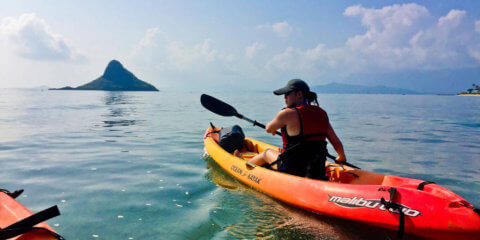
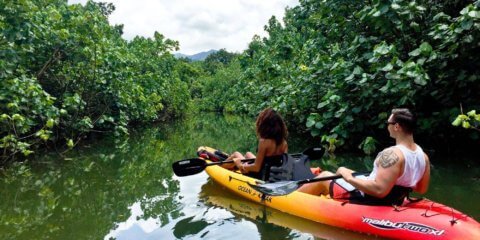
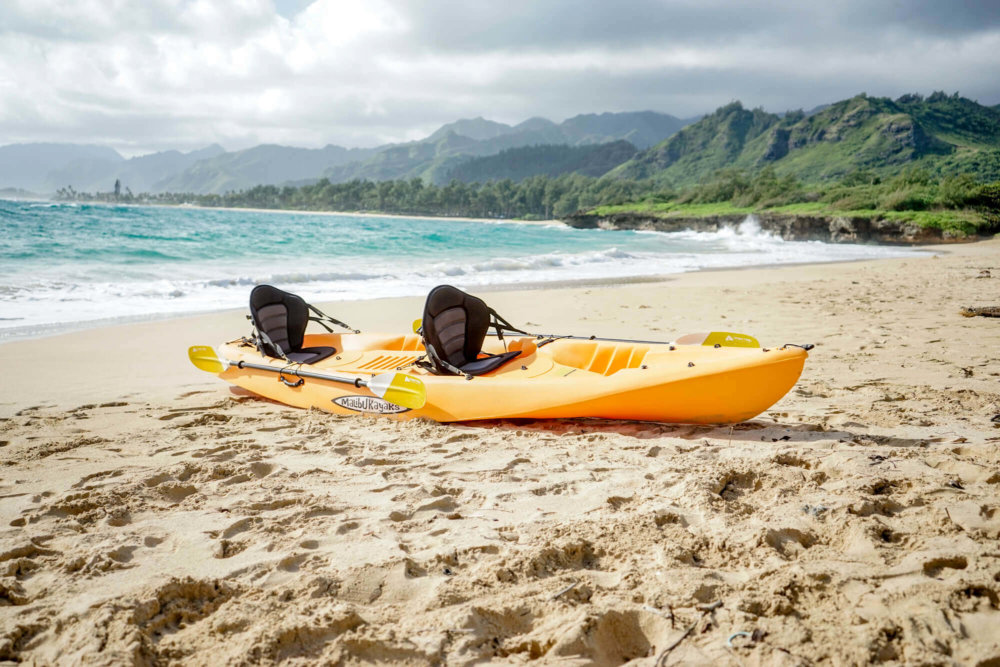
See Kailua from the water. Paddle to the Mokulua Islands, explore the coastline, or simply drift in the calm bay. Kailua kayak rentals put the bay at your fingertips.
🚶 On Foot
Kailua town is wonderfully walkable. Stroll the shops along Kailua Road, walk the beach path, or take the Kawai Nui Marsh trail to see native birds and the ancient fishpond up close. Check out our Kailua Beach Guide for walking routes.
Experience Kailua With Our Gear Rentals
Whether you want to kayak to the Mokulua Islands, bike through town to Kawai Nui Marsh, or simply relax on one of the world's best beaches — we have the gear you need.
Browse All Rentals →Pick up at our Kailua shop: 134B Hamakua Dr, Kailua, HI 96734 | Call (808) 498-1894