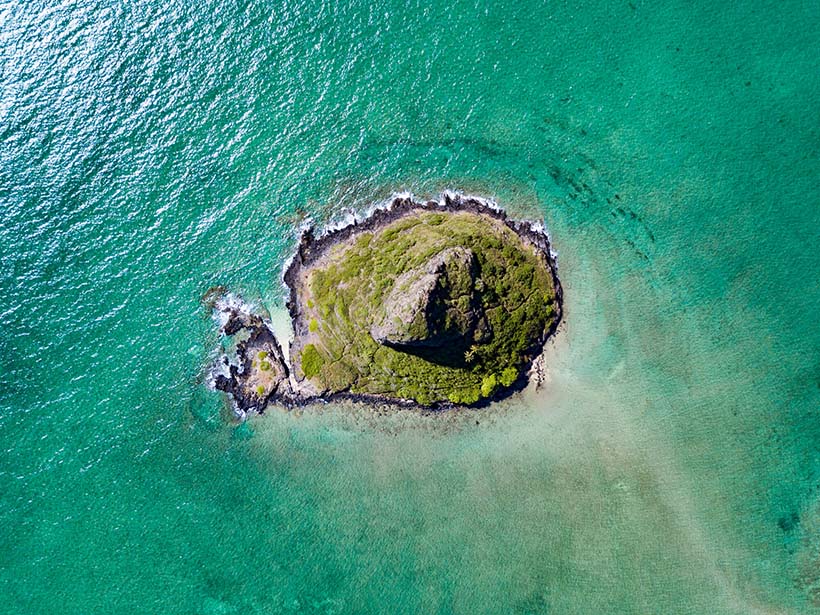
Oahu Wildlife & Seabird Sanctuaries Guide
Oahu's windward coast is home to some of Hawaii's most vital wildlife sanctuaries — protected islets, marshes, and coastal habitats that shelter seabirds, endangered endemic waterbirds, and marine life. Whether you're kayaking past Popo'ia Islet, paddling around the Mokulua Islands, or birdwatching at Hāmākua Marsh, understanding these sanctuaries makes your adventure richer and helps you explore responsibly.
Quick Guide: Three major wildlife sanctuaries define Oahu's windward coastline. Popo'ia Islet (Flat Island) — a 3.67-acre seabird sanctuary off Kailua Beach home to wedge-tailed shearwaters and Bulwer's petrels. The Mokulua Islets — two protected seabird islets off Lanikai where shearwaters nest and red-footed boobies roost. And Hāmākua Marsh — part of the largest remaining wetland in Hawaii, where four species of endangered endemic waterbirds thrive. All three are protected by DLNR Chapter 126 rules.

Why Wildlife Matters on Oahu
Hawaii's isolation in the Pacific created a unique ecosystem found nowhere else on Earth. Many of the birds and marine animals you'll see on Oahu's windward coast exist only in Hawaii. That's why these sanctuaries are protected — they give endangered species a fighting chance. As a visitor or local kayaker, knowing what you're looking at and how to behave around these species makes all the difference.
Popo'ia Islet Seabird Sanctuary (Flat Island)
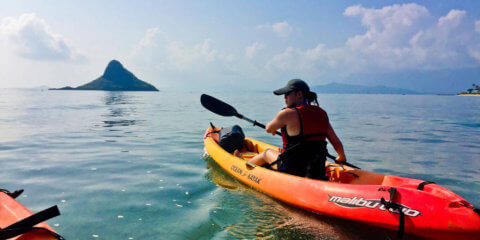
Popo'ia, also known as Flat Island, is the small, flat islet you see just off Kailua Beach. This 3.67-acre seabird sanctuary is a critical nesting site protected by the Hawaii Division of Forestry and Wildlife (DOFAW).
Its ecosystem sits on vegetated coral, utilized primarily by ʻuaʻu kani (wedge-tailed shearwaters), ʻou (Bulwer's petrels), and pigeons. You may also spot ʻopaeʻula (red shrimp) along the shoreline.
Access Rules
- Restricted access: Visitors must stay below the high water mark on the Kailua-facing side to avoid trampling seabird burrows.
- Read the signs: Posted signage clearly marks sensitive nesting areas. Do not enter roped-off zones.
- No landing on the ocean-facing side: The far side is strictly off-limits to protect nesting colonies.
- All sanctuary rules fall under Chapter 126 (Wildlife Sanctuaries).
What You'll See
Between April and November, wedge-tailed shearwaters return to Popo'ia to nest in underground burrows. At dusk, you'll hear their eerie, wailing calls — which sound surprisingly like crying babies. Bulwer's petrels nest in crevices and are nocturnal, so you're more likely to spot shearwaters during the day.
Kayaking tip: Paddle around Popo'ia from a respectful distance (at least 50 yards). The best views are from the water. Our Popo'ia Island Kayaking Adventure guides you on the ideal route.
Mokulua Islets Seabird Sanctuary
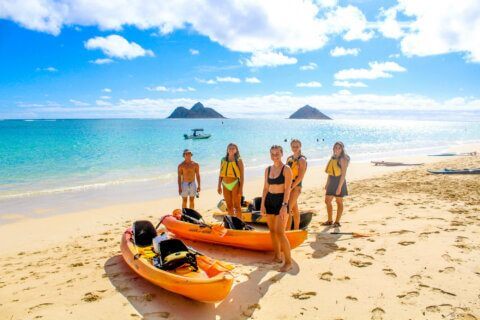
The Mokulua Islands — Mokulua Nui (the larger northern islet) and Mokulua Iki (the smaller southern islet) — are the iconic twin islands you see from Lanikai Beach. Both are protected as a seabird sanctuary under DLNR management.
These islets are home to nesting wedge-tailed shearwaters (ʻuaʻu kani) and red-footed boobies (ʻā). You may also spot ruddy turnstones (akekeke) foraging along the rocks, and Laysan albatross (moli) soaring overhead.
Permits & Rules
- RESTRICTED sanctuary per Chapter 126. Access is limited to areas below the high water mark.
- Closed from sunset to sunrise.
- No fires, dogs, camping, tents, tarps, or structures at any time.
- Commercial activities require a permit from the Oʻahu DOFAW office.
- Scientific research, conservation, or Native Hawaiian traditional practices may be possible with a permit — see DOFAW Permits & Guidelines.
What You'll See
Paddle around Mokulua Nui (the larger islet accessible by kayak) and look for shearwater burrows in the vegetated slopes above the high water mark. Red-footed boobies nest in shrubs and trees — look for their bright red feet and blue bills. Between November and February, you may spot Laysan albatross riding the thermals overhead.
Kayaking tip: The Mokulua Islands Self-Guided Kayak Adventure route takes you around the north end of Mokulua Nui for the best wildlife viewing. Stay at least 50 yards offshore to avoid disturbing nesting birds.
Hāmākua Marsh Wildlife Sanctuary
Hāmākua Marsh, together with adjacent Kawainui Marsh, forms the largest remaining wetland habitat in the State of Hawaii. Owned and managed by DLNR, this wildlife sanctuary is home to four species of endemic, endangered waterbirds found nowhere else on Earth.
The marsh has a rich cultural and geographical history. It was a source for inland fishing and wetland taro production, supporting a large population of native Hawaiians. Hāmākua Marsh was once a stream flowing from Kawainui Marsh to Kaʻelepulu Marsh (now Enchanted Lake), but water flow has been diverted. Today it depends on rainfall and runoff from Kailua town.
The Four Endemic Waterbirds
ʻAeʻo — Hawaiian Stilt
An elegant, endangered wading bird with impossibly long pink legs, often seen wading in Kawainui and Hāmākua marshes. It has the second-longest legs relative to body size of any bird, allowing it to feed in deeper water. Its Hawaiian name means "one standing tall."
ʻAlae Keʻokeʻo — Hawaiian Coot
A dark waterbird with a distinctive white frontal shield, endemic to Hawaii's freshwater wetlands. Known as the "kickboxer" of Hawaiian marshes — it flips onto its back during fights and uses its large lobed feet to kick opponents. Feeds on aquatic plants, snails, and insects.
Koloa Maoli — Hawaiian Duck
Hawaii's only native duck, with mottled brown plumage and a softer, less vocal quack than mallards. Critically endangered. It can hybridize with introduced mallards, threatening its pure genetic line — one of the reasons protecting these marsh sanctuaries is so important.
ʻAlae ʻUla — Hawaiian Gallinule
One of the world's rarest waterbirds, with a population in the hundreds. Features a bright red frontal shield and colorful plumage. In Hawaiian mythology, the ʻAlae ʻUla stole fire from the gods to give to humans, scorching its white forehead red in the process. It builds floating nests on dense marsh vegetation.
Access & Rules
- Restricted sanctuary per Chapter 126. Access is prohibited in wetland areas bounded by the perimeter fence and makai canal.
- Best viewing: From the paved path along the marsh edge. Bring binoculars for the best experience.
- Commercial activities may be possible with a permit — contact DOFAW.
- Other activities (research, Native Hawaiian practices) — see permits page.
Location: Hāmākua Marsh is located at the southern end of Kailua, just makai (ocean side) of Kailua Road. It's a short walk or bike ride from Kailua Beach Park and our shop at 134B Hāmākua Dr.
Marine Life on Oahu's Windward Coast
Beyond the bird sanctuaries, Oahu's windward waters host some of Hawaii's most iconic marine animals. You'll encounter them while kayaking, snorkeling, or simply walking along the beach.
Honu — Green Sea Turtle
Hawaiian green sea turtles are a common and beloved sight along Kailua and Lanikai beaches. They can hold their breath for up to five hours while resting and navigate using Earth's magnetic fields. As a keystone species, they maintain healthy seagrass beds that support marine biodiversity.
Viewing rules: Stay at least 10 feet away (federal law). Do not touch, chase, or feed them. If a honu approaches you, remain still and let it pass. Report injured or entangled turtles to NOAA at 1-888-256-9840.
Read our full guide: Sea Turtles on Oahu — Where & How to See Them Respectfully
Ilio-holo-i-ka-uaua — Hawaiian Monk Seal
One of the rarest marine mammals in the world, with a population under 1,500. These endangered seals often haul out on Kailua's sandy shores to rest. They can dive up to 1,800 feet deep and hold their breath for 20 minutes. In Hawaiian mythology, monk seals are considered ʻaumākua (family guardian spirits).
Viewing rules: Stay at least 150 feet away. If a seal hauls out on the beach, give it space. Do not approach, even if it appears to be sleeping. Report monk seal sightings to NOAA at 1-888-256-9840. The beach may be temporarily roped off — respect these closures.
How to Explore Responsibly
- Stay on the water side of the high-water mark around sanctuary islets. The vegetation above the high-water line is nesting habitat.
- Keep noise levels down near nesting colonies. Loud voices carry across water and stress the birds.
- Never feed wildlife. Human food is harmful to native species.
- Pack out what you pack in. Trash attracts predators like rats and mongooses that prey on seabird eggs and chicks.
- Use reef-safe sunscreen. Chemical sunscreens damage coral reefs and marine life.
- Support conservation through organizations like the Hawaii DLNR Division of Forestry and Wildlife and the Audubon Society.
Where to Kayak for the Best Wildlife Views
| Route | Wildlife to See | Best Time | Launch Point |
|---|---|---|---|
| Popo'ia Island Loop | Shearwaters, petrels, honu | Morning (calm water, active birds) | Kailua Beach Park boat ramp |
| Mokulua Islands Paddle | Shearwaters, boobies, albatross, honu, monk seals | Early morning (calmest water, best wildlife) | Kailua Beach Park boat ramp |
| Kailua Bay Exploration | Shearwaters (flyovers), honu, fish | Morning to early afternoon | Kailua Beach Park boat ramp |
| Kawainui/Hāmākua Marsh Walk | ʻAeʻo, ʻalae keʻokeʻo, koloa maoli, ʻalae ʻula | Sunrise or late afternoon | Kailua Road (paved path) |
Frequently Asked Questions
Can I land on Popo'ia Island (Flat Island)?
You can land on the Kailua-facing beach below the high water mark, but you must not enter the vegetated area above it. The ocean-facing side is entirely off-limits. Read posted signs carefully.
Can I land on the Mokulua Islands?
Landing is allowed on the beaches below the high water mark. The interior of the islands is restricted. The islands are closed from sunset to sunrise.
What time of year is best for wildlife viewing?
Seabird nesting season runs roughly April through November, with peak activity in summer. Wedge-tailed shearwaters return to burrows at dusk and their calls are most audible after sunset. Hāmākua Marsh is active year-round, with waterbird activity highest in the early morning.
Do I need a permit to kayak near the sanctuaries?
No permit is needed for recreational kayaking near the sanctuaries as long as you stay on the water and do not land in restricted areas. Commercial tour operators need a DLNR permit.
What should I bring for wildlife viewing?
Binoculars, a camera with a zoom lens, reef-safe sunscreen, water, and a hat. For marsh viewing, bring bug spray. Early morning light is best for photography.
Ready to explore? Rent a kayak from our shop at 134B Hāmākua Dr, Kailua, launch from Kailua Beach Park's paved ramp, and paddle out to experience Oahu's incredible wildlife sanctuaries firsthand.